


These thoughts have been close to my heart for the past four years. I shared them with our Fellowship of the Ring book club tonight, and wanted to offer them here too. I hope they’re a blessing.
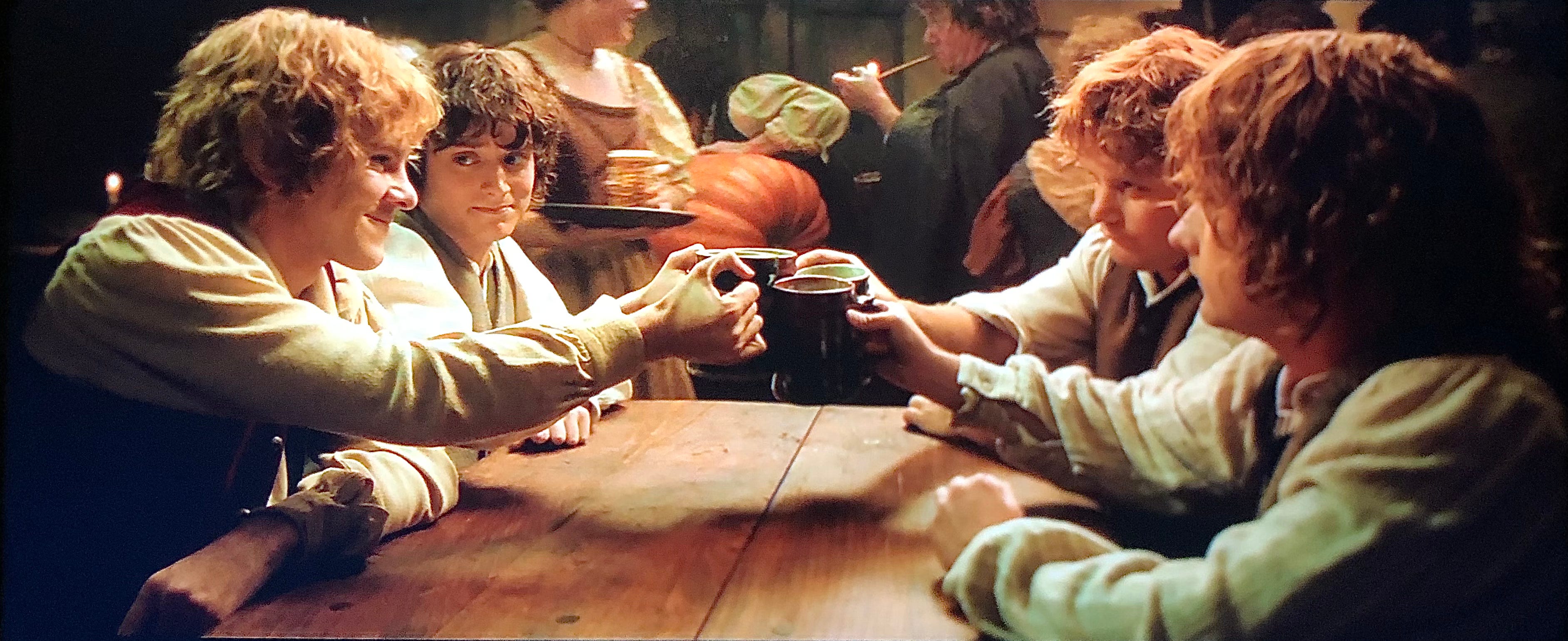
When Frodo prepares to leave the Shire, the others do not argue him out of it or try to take the Ring from him. They simply refuse to let him go alone: a choice echoing one of the oldest vows of faithfulness we have.
Ruth’s words to Naomi—“Where you go, I will go”—are not sentimental, though they are often treated as such at weddings. They are practical, costly, and irreversible. Ruth leaves her people, her gods, and everything she has known. She embraces an uncertain future alongside an elderly widow, with no promise of safety, security, or reward. And crucially, she does not take over Naomi’s grief or destiny; she simply binds herself to it.
That is exactly what Sam, Merry, and Pippin mirror (and, in his own way, Fatty). They do not claim Frodo’s burden as their own; the Ring remains his. But they refuse the lie Frodo has told himself—that the burden must be carried alone.
One of the quietest but clearest signs of this is the detail that they pack clothes for winter. It says: we are not coming along only for the exciting part. We are coming for the hard part, and a future we cannot yet see. This is not adventure—it is covenant.
‘Good heavens!’ said Frodo. ‘I thought I had been both careful and clever. I don’t know what Gandalf would say. Is all the Shire discussing my departure then?’
‘Oh no!’ said Merry. ‘Don’t worry about that! The secret won’t keep for long, of course; but at present it is, I think, only known to us conspirators. After all, you must remember that we know you well, and are often with you. We can usually guess what you are thinking. I knew Bilbo, too. To tell you the truth, I had been watching you rather closely ever since he left. I thought you would go after him sooner or later; indeed I expected you to go sooner, and lately we have been very anxious. We have been terrified that you might give us the slip, and go off suddenly, all on your own like he did. Ever since this spring we have kept our eyes open, and done a good deal of planning on our own account. You are not going to escape so easily!’
‘But I must go,’ said Frodo. ‘It cannot be helped, dear friends. It is wretched for us all, but it is no use your trying to keep me. Since you have guessed so much, please help me and do not hinder me!’
‘You do not understand!’ said Pippin. ‘You must go - and therefore we must, too. Merry and I are coming with you. Sam is an excellent fellow, and would jump down a dragon’s throat to save you, if he did not trip over his own feet; but you will need more than one companion in your dangerous adventure.’
The hobbits have been quietly watchful for months, making sure Frodo doesn’t slip away without them. What they’re practicing isn’t surveillance; it’s vigil. They don’t watch him because they distrust him; they watch because they know how pressure works—how easily love can convince someone they’re better off alone. So here, for them, love looks like staying awake and keeping your eyes on a slippery friend.
Frodo never asks them. They choose him.
When my eldest was a colicky baby, we had a mantra for her care: “She can cry, but she can’t cry alone.” We couldn’t fix her pain or stop her misery. We couldn’t even soothe it away, but we could remain calm and stay. And that faithful presence, we learned, was not nothing.
That is the kind of presence I see reflected in these dear hobbits: unheroic and steadfast. It is the first true power Tolkien shows us—not domination, not physical strength, not even courage, but companionship freely chosen.
Where you go I’ll go. These are not light words. Tolkien, through these hobbits, will show us what such words truly weigh.
Eta: When I first made the connection four years ago, I talked about it to anyone who would listen—and I sobbed every time.
We had just had our house fire. In the middle of it, I texted a childhood friend I’d only seen at weddings and funerals for the last fifteen years and asked him to pray as we navigated everything. He texted back and asked me what I needed more: money, or boots on the ground.
Because we’d just had the derecho in our town, everyone was dealing with disasters and there was no help to hire. So I told him, “boots on the ground.” That weekend, he showed up with ten people—and brought along two more of my childhood friends just to encourage me. And when I say childhood friends, I mean I’ve known these guys since I was five. They are brothers of my heart.
At the same time, my personal life was deeply disorienting. I truly felt the Lord used them to show me I wasn’t alone—that He would care for me, and that He had also given me living, breathing people who cared for me too.
Then I reread The Fellowship of the Ring, and it was right there on the page: people choosing what is right over what is easy, because of love. People refusing to let others walk their journeys alone. I’m pretty sure it’s my favorite chapter in the whole series now.
Beautifully said, Ambre! ♥️
Aww I love this so much! Beautiful!